
signs of high cortisol in men
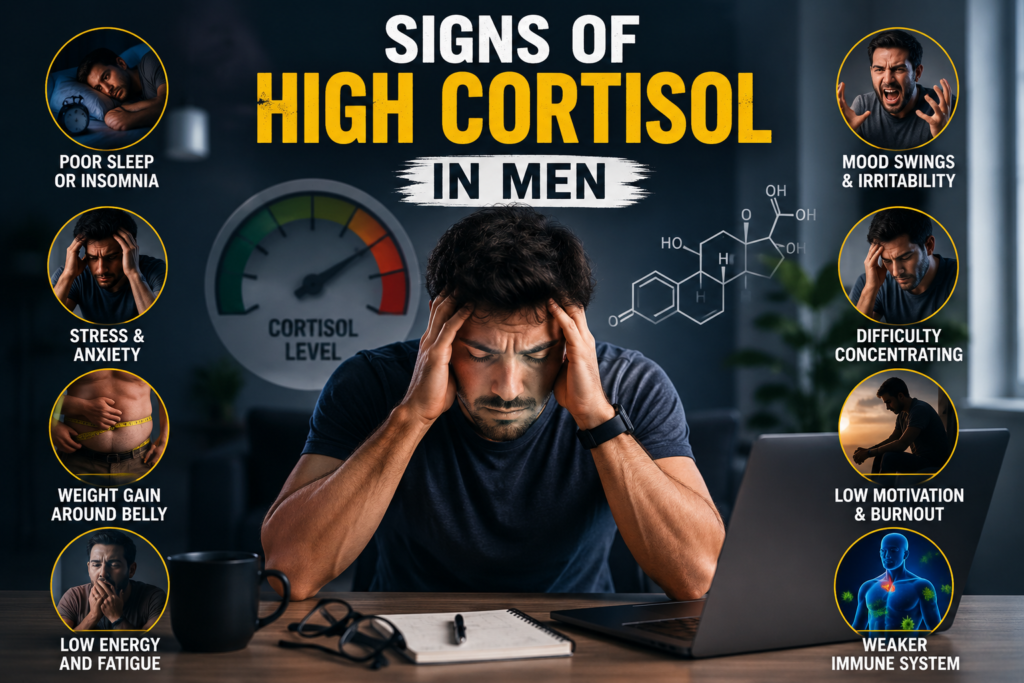
Cortisol is a hormone that the adrenal glands make. It is often called the stress hormone because the body releases cortisol when it is under stress.
Cortisol is not bad. When we have the amount of cortisol it helps our body manage stress, control energy regulate blood sugar, support metabolism maintain blood pressure and help us wake up and stay alert.
The problem is when cortisol stays high for a time. This can happen because of the way we live our lives. Many men are under stress because of things like work pressure, financial problems, poor sleep, anxiety, overthinking, too much screen time and unhealthy habits.
When cortisol stays too high for long it can affect our physical health, mental health, energy, mood, sleep and overall well-being.
This article explains the signs of high cortisol in men in simple language.
- Constant Stress and Anxiety
One of the signs of high cortisol is feeling stressed or anxious all the time. A man with cortisol may feel mentally tense, overwhelmed nervous, restless and unable to relax. Even small problems can start to feel much bigger than they really are. The body stays in fight or flight mode for long and this can exhaust us over time.
- Poor Sleep or Insomnia
High cortisol can really affect our sleep. Normally cortisol levels should go down at night so our body can relax.. When cortisol stays too high we may have trouble falling asleep wake up a lot have light sleep feel tired after sleeping or have racing thoughts at night. Some men feel physically exhausted but mentally wired. Poor sleep can then increase cortisol more creating a bad cycle.
- Weight Gain Around the Belly
cortisol is strongly linked to gaining fat around the belly. Some men notice that they have stomach fat have trouble losing weight or gain fat even when they exercise. This happens because long-term stress affects our metabolism and appetite. Stress can also make us want to eat foods, junk food, fast food or high-calorie snacks. Many stressed people eat without realizing it and this is called eating.
- Low Energy and Fatigue
High cortisol can drain our body over time. Men with cortisol may feel tired all the time have low energy feel mentally exhausted or feel weak or burned out. When they rest they may still feel fatigued. The body struggles when stress hormones stay high for long.
- Mood Swings and Irritability
High cortisol can affect our control. Some men become irritated angry emotionally sensitive frustrated over small things or impatient. Stress overload affects both the brain and nervous system. When the body stays stressed all the time emotional stability often gets worse.
- Difficulty Concentrating
High cortisol can affect our focus and memory. Some men experience brain fog, concentration, forgetfulness, trouble thinking clearly or reduced productivity. The brain does not function under constant stress. Mental overload slowly reduces our attention span. Focus quality.
- Lower Testosterone Levels
This is important. Term high cortisol may negatively affect testosterone. Cortisol and testosterone often work against each other in the body. When cortisol stays high for long some men may experience lower sex drive, reduced motivation, lower energy, reduced muscle growth or mood changes. This is one reason chronic stress can affect health badly.
- Reduced Muscle Mass
High cortisol may increase muscle breakdown over time. Some men notice that they lose muscle make progress at the gym take longer to recover or feel physically weak. The body struggles to build and recover muscle properly when stress stays too high. This is especially common with sleep, overtraining, chronic stress or bad nutrition.
- Increased Cravings and Emotional Eating
Stress often changes our eating behavior. High cortisol may increase cravings for sugar, junk food, salty snacks or fast food. Some men eat not because they are hungry. Because they are stressed. This emotional eating can worsen weight gain, low energy or mood problems. The cycle becomes hard to break.
- High Blood Pressure
high cortisol may increase blood pressure in some people. Stress affects heart rate, blood vessels and nervous system activity. Long-term stress can put pressure on the cardiovascular system. This is why stress management matters for long-term health.
- Weaker Immune System
much cortisol over a long time may weaken our immune system. Some men notice that they get sick often recover from illness or feel physically run down. The body does not recover efficiently when stress becomes chronic.
- Motivation and Burnout
Many men with high cortisol feel mentally burned out. They may experience loss of motivation mental exhaustion, lack of interest in goals or feel emotionally drained. The brain struggles when stress becomes nonstop. Burnout is not laziness. It is often a sign of mental overload.
- Increased Heart Rate or Restlessness
Some men with cortisol constantly feel on edge. Possible signs include heartbeat, feeling restless, tension in the body trouble relaxing or feeling mentally overstimulated. The nervous system remains too active for long.
- Causes of High Cortisol in Men
things can increase cortisol levels. Common causes include stress, poor sleep, financial pressure, relationship problems, anxiety, overworking, excessive caffeine, overtraining in the gym poor diet or lack of relaxation. In some cases medical conditions may also affect levels.
- Healthy Ways to Lower Cortisol Naturally
The goal is not to remove cortisol. The goal is balance. Healthy habits that may help cortisol include better sleep, exercise, stress management, healthy eating and reducing overstimulation. Small daily improvements matter more than changes.
Final Thoughts
Cortisol is a hormone that helps our body handle stress.. When cortisol stays too high for too long it can affect sleep, mood, energy, focus, weight, testosterone and overall health. Common signs of cortisol in men include stress, anxiety, belly fat, poor sleep, fatigue, mood swings, low motivation and brain fog. Modern life constantly pushes stress and overstimulation. That is why healthy habits matter more, than ever. The best long-term approach is focusing on sleep stress control, exercise, healthy eating, mental balance and consistent routines. A healthier mind usually creates a body too.