
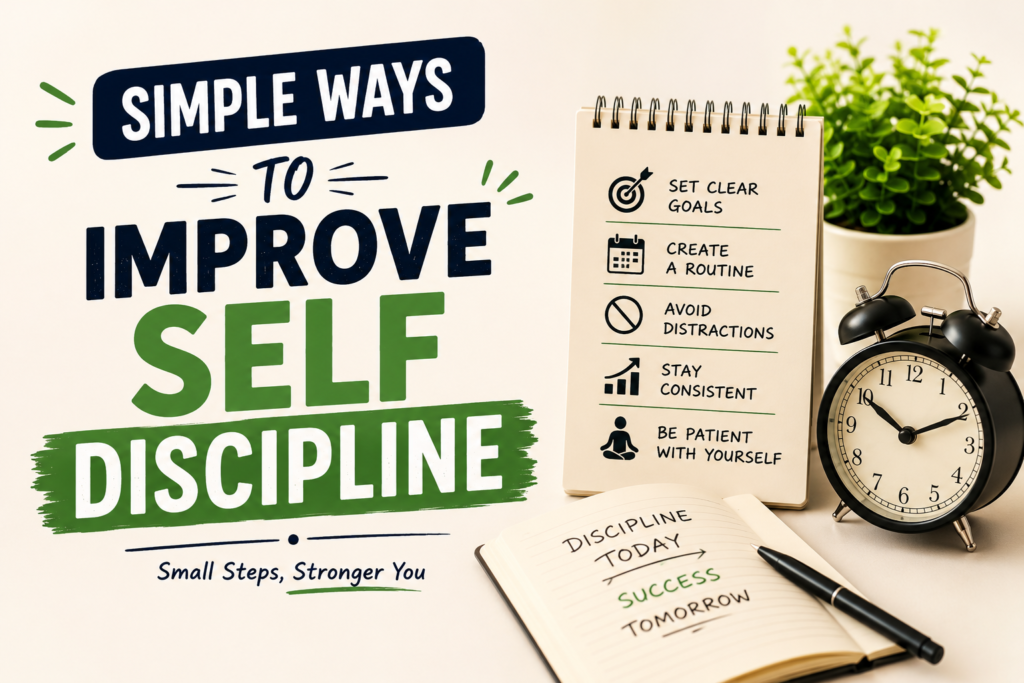
Simple Ways to Improve Self Discipline
Self discipline is one of the useful skills a person can build. It helps people study regularly exercise consistently save money finish work avoid distractions and make long term decisions. Self discipline is really important for achieving our goals.
Many people think self discipline means being extremely strict or forcing yourself to suffer. That is not true. Self discipline is simply the ability to do what matters when you do not feel like doing it. You can do what is important even if you do not want to.
The good news is that self discipline is not something people are born with. It can be trained through habits and small actions. This article explains practical ways to improve self discipline.
- Start Small
One of the biggest mistakes is starting too big. For example you might say you want to study for 8 hours every day or exercise for 2 hours. That is much. Instead start with something like studying for 20 minutes or exercising for 10 minutes. Small actions are easier to repeat. Consistency builds discipline.
- Stop Depending on Motivation
Motivation changes every day. Some days you feel excited. Some days you do not. Discipline means acting without strong feelings. Create systems of waiting to feel ready. Do not wait until you feel motivated to start something.
- Set Clear Rules
Vague goals create confusion. Of saying “I want to improve” try saying “I will read 10 pages every day” or “I will sleep at 11 PM” or “I will exercise 4 days a week”. Clear rules reduce decision making. You know what you need to do.
- Remove Temptation
People often overestimate willpower. Make good habits easier. For example keep your phone away block distracting websites or prepare your study materials. Environment matters. If you are surrounded by distractions it is harder to focus.
- Build Daily Routines
Routine reduces effort. Create a routine like waking up exercising and working in the morning. In the evening review your tasks and sleep. Repeated routines become automatic. You do not have to think about what to do.
- Keep Promises to Yourself
broken promises damage trust. If you say you will study for 20 minutes do it. If you say you will exercise in the morning do it. Self discipline grows through self respect. You need to respect yourself and keep your promises.
- Focus on One Habit First
Trying to fix everything usually fails. Choose one habit like sleep exercise or study. Master one habit. Then add another. Do not try to change everything at once.
- Track Progress
Measure your actions. For example check if you studied today walked today or completed your tasks. Tracking creates awareness. You can see how far you have come.
- Accept Boredom
People quit because tasks become boring.. Reality is that discipline often looks boring. Success usually comes from repeating actions. You need to be patient and keep going.
- Use Time Blocks
Schedule your tasks. For example study from 8 to 9 work from 10 to 11 and exercise from 5 to 6. Specific time improves follow through. You know what you need to do and when.
- Reduce Instant Gratification
distractions give quick pleasure. For example endless scrolling, notifications or constant entertainment. Train yourself to prefer rewards like reading, learning or deep work.
- Use the Five-Minute Rule
When resistance appears tell yourself ” five minutes”. Starting is usually the part. Action creates momentum. Once you start you can keep going.
- Improve Sleep
Poor sleep weakens discipline. Lack of sleep affects focus, mood and decisions. Sleep is not laziness. It supports performance. You need to sleep to do your best.
- Exercise Regularly
Exercise builds discipline directly. Benefits include energy, better mood and stronger routines. Simple movement matters. You do not have to be an athlete to exercise.
- Learn to Delay Pleasure
Ask yourself “do I want comfort or future results?”. For example study before entertainment or finish work before scrolling. Delay strengthens self control. You can wait for what you want.
- Stop Perfection Thinking
People often quit after one mistake.. That is wrong. Return the day and keep going. Do not give up because you made a mistake.
- Reduce Decisions
many choices drain energy. Prepare your clothes, schedule and study plan. Make important actions automatic. You do not have to think about what to do every day.
- Build Accountability
Tell someone about your goals. Track your progress publicly. Record it. Accountability increases follow through. You are more likely to do something if someone is watching.
- Control Your Environment
Environment often beats discipline. Create a workspace, clean desk or organized room. Design your surroundings to help you focus.
- Practice Saying No
Discipline includes refusal. Say no to distractions, delays or impulsive decisions. Every yes means saying no to something. You cannot do everything.
- Think Long-Term
Ask yourself “will this matter in one year?”. Short term comfort often blocks term growth. You need to think about what you want to achieve in the term.
- Create Consequences
For example finish work before gaming or no entertainment until goals are done. Consequences increase action. You are more likely to do something if there is a consequence.
- Stop Comparing Yourself
Someone Routine does not matter. Focus on yesterdays version of you. Comparison wastes energy. You should focus on your progress.
- Reward Consistency
Celebrate completion. For example take a break listen to music. Do your favorite activity. Reward action not excuses. You should be proud of what you have achieved.
- Become the Type of Person Who Acts
of saying “I want discipline” think “I am someone who finishes tasks”. Identity influences behavior. You need to believe in yourself.
- Expect Resistance
You will feel lazy, distracted or want shortcuts. That is normal. Discipline develops by acting. You need to keep going even when it’s hard.
- Build Systems That Make Success Easy
For example fixed wake time, fixed study time or fixed exercise plan. Systems reduce reliance on feelings. You do not have to feel motivated to do something.
Final Thoughts
Self discipline is not punishment. It is learning to act even when emotions change. Remember to start small build routines remove distractions, track progress sleep well and focus on consistency. You do not need effort. Small disciplined actions repeated for months usually create results than short bursts of motivation. Self discipline is, like a muscle that you can build over time with practice and patience.