
How to Control Urges When Alone
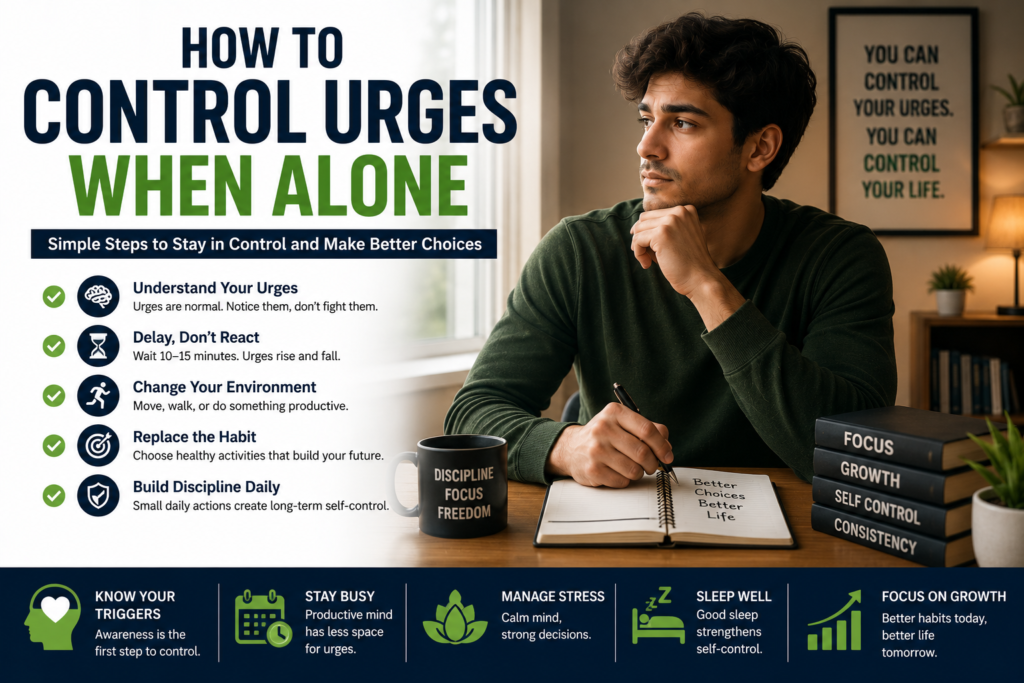
Being alone can sometimes make urges feel stronger. These urges can be sexual urges, the urge to watch content endlessly, procrastinate, eat unnecessarily, seek instant pleasure, or repeat habits you later regret.
Many people think urges are a sign of weakness or lack of discipline. That is usually not true. Urges are normal human experiences. The challenge is not removing urges completely—it is learning how to manage them without letting them control decisions.
When people are alone, there are fewer distractions, less social pressure, and easier access to habits through phones, computers, or routines. That is why urges often feel stronger in private moments.
The good news is that urges can be managed with practical actions.
1. Understand That Urges Rise and Fall
The first mistake people make is fighting urges as if they must destroy them immediately.
Urges usually behave like waves:
- They rise
- Reach a peak
- Slowly weaken
Most urges do not stay intense forever.
Learning to wait instead of reacting immediately often reduces their power.
2. Delay the Action for 10–15 Minutes
Instead of saying:
“I will never do this again.”
say:
“I will wait 15 minutes.”
This works because urges are often strongest in short periods.
During those minutes:
- Walk
- Drink water
- Change rooms
- Stretch
Many urges weaken naturally.
3. Identify Your Trigger
Urges rarely appear randomly.
Ask:
- What happened before this?
- Am I bored?
- Am I stressed?
- Am I lonely?
- Am I avoiding work?
Knowing the trigger matters more than fighting the urge itself.
4. Stop Staying in Trigger Environments
Environment influences behavior.
Examples:
- Lying in bed with phone
- Sitting alone late at night
- Endless scrolling
- Closed room with nothing to do
Change environment quickly.
Move:
- Outside
- Another room
- Desk
- Balcony
Physical movement interrupts automatic habits.
5. Create Friction
Make unwanted behavior harder.
Examples:
- Log out of distracting apps
- Keep devices away
- Use website blockers
- Leave phone outside room
People rely too much on willpower.
Good systems beat motivation.
6. Replace the Habit, Not Just Remove It
Removing urges without replacement usually fails.
Replace with:
- Exercise
- Reading
- Walking
- Journaling
- Music
- Learning
Your brain wants activity.
Give it something better.
7. Avoid “One More Time” Thinking
Common thoughts:
- Just five minutes
- Last time
- Tomorrow I stop
This thinking usually repeats cycles.
Instead ask:
“What happens after I finish?”
Think beyond the moment.
8. Watch Your Sleep
Poor sleep increases impulsive decisions.
Sleep deprivation affects:
- Self-control
- Mood
- Attention
Try:
- Consistent sleep time
- Less late-night screen use
- Enough rest
Fatigue makes urges harder to manage.
9. Reduce Boredom
Many urges are actually boredom.
Ask:
“If I had something meaningful to do right now, would I still want this?”
Build activities:
- Projects
- Skills
- Goals
- Exercise
- Learning
Empty time often becomes automatic behavior.
10. Train Discomfort Tolerance
People often act because they want discomfort to disappear.
Practice sitting with small discomfort:
- Wait before checking phone
- Delay snacks
- Finish tasks first
Small discipline builds stronger control.
11. Exercise Regularly
Physical movement changes energy.
Good options:
- Walking
- Running
- Push-ups
- Gym
- Sports
Exercise reduces restlessness and improves mood.
You do not need intense workouts.
Consistency matters more.
12. Avoid Extreme Rules
Do not say:
- Never again
- Perfect control only
- One mistake means failure
Extreme rules often create relapse cycles.
Focus on progress.
13. Notice Emotional States
Sometimes urges hide emotions.
Ask:
- Am I anxious?
- Am I lonely?
- Am I frustrated?
- Am I avoiding something?
Fixing emotion may reduce the urge.
14. Build Daily Structure
Unstructured days increase impulsive behavior.
Simple structure:
- Wake time
- Work time
- Meals
- Exercise
- Relaxation
- Sleep
Structure reduces decision fatigue.
15. Reduce Instant Dopamine Habits
Constant stimulation changes expectations.
Examples:
- Endless scrolling
- Fast entertainment
- Constant notifications
Add slower rewards:
- Reading
- Deep work
- Walking
- Long projects
Train attention.
16. Use the “Next Action” Rule
When urge appears ask:
“What is the next useful thing I can do?”
Examples:
- Clean desk
- Reply to email
- Walk outside
- Drink water
Small action breaks momentum.
17. Stop Counting Identity Around Urges
Do not think:
- I have no self-control
- I always fail
Behavior is not identity.
Focus on actions.
18. Track Patterns
Notice:
- Time
- Place
- Emotion
- Trigger
Patterns reveal solutions.
19. Accept That Urges Never Fully Disappear
The goal is not becoming emotionless.
Healthy control means:
- Notice urge
- Choose response
- Move on
Control is a skill.
20. Focus on Building a Better Life, Not Fighting Yourself
People often obsess over stopping urges.
A stronger approach is building:
- Better routines
- Better health
- Better goals
- Better relationships
When life becomes fuller, urges often become easier to manage.
Final Thoughts
Controlling urges when alone does not mean becoming perfectly disciplined.
Urges are normal.
What matters is creating systems that make better choices easier.
Remember:
- Delay reactions
- Change environment
- Replace habits
- Reduce boredom
- Sleep well
- Exercise
- Build structure
The goal is not winning one moment.
The goal is becoming someone whose daily habits make self-control easier over time.