
Sexual Harassment Training
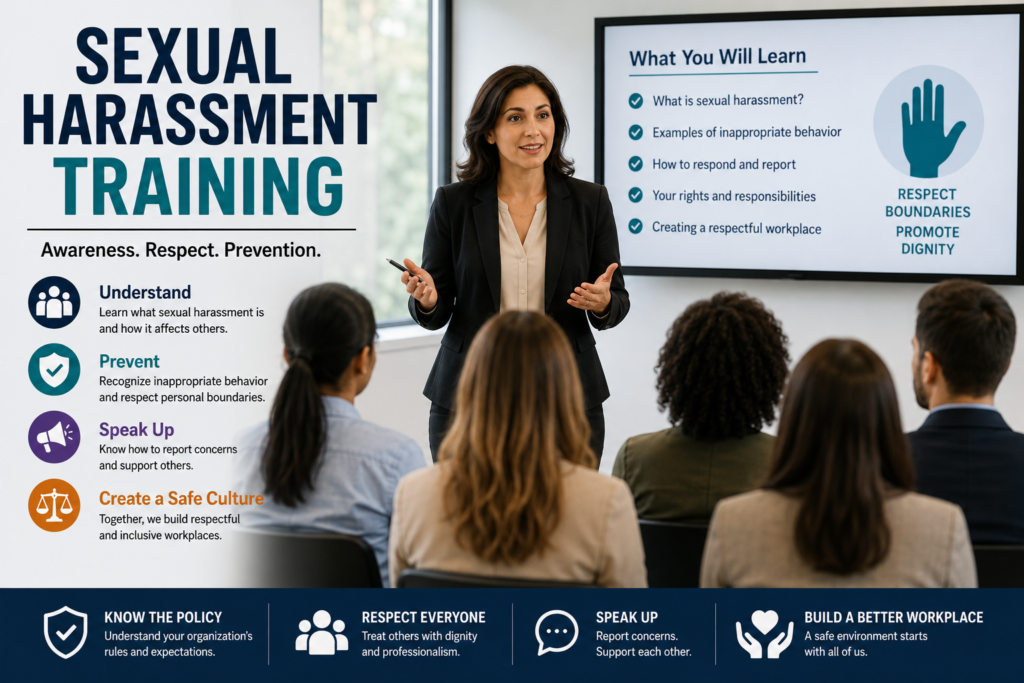
Sexual harassment training is a program that teaches people how to recognize, prevent respond to and report harassment. This training is commonly used in workplaces, schools, universities organizations and professional environments to create more respectful spaces.
The goal of harassment training is not to make people afraid of normal interaction. Instead it helps people understand boundaries, respectful behavior, communication, professional conduct and how to respond if problems occur with harassment.
Many organizations use training because preventing harassment problems is usually more effective than solving problems later.
Sexual harassment generally refers to behavior of a sexual nature that creates discomfort, pressure, intimidation, embarrassment or an unhealthy environment. Training helps people understand what behaviors may cross personal boundaries in terms of sexual harassment.
Many people think sexual harassment only means actions but training usually explains that inappropriate behavior can take different forms, including sexual harassment.
Examples may include:
- Unwanted comments
- Repeated jokes
- Inappropriate messages
- Offensive language
- Unwanted attention
- Suggestive gestures
- Pressure for personal relationships
- Sharing explicit material
Training teaches that context, frequency, impact and local policies often matter in cases of sexual harassment.
One of the important ideas taught during sexual harassment training is respect for others.
Respect means:
- Listening to boundaries
- Treating people professionally
- Avoiding behavior
- Communicating clearly
- Understanding differences
Respect creates workplaces and stronger professional relationships, which helps prevent sexual harassment.
Another major topic is consent and personal boundaries in the context of harassment.
Training often explains that consent means agreement and comfort when it comes to sexual harassment.
People should not assume agreement based on:
- Silence
- Pressure
- Social expectations
- Position of authority
communication reduces confusion and improves workplace culture, which helps prevent sexual harassment.
Workplace sexual harassment training usually explains categories of behavior related to sexual harassment.
Verbal harassment may include:
- Sexual jokes
- Repeated comments
- questions
- Offensive language
Nonverbal harassment may include:
- Staring
- Gestures
- Displaying content
- Invading personal space
Physical harassment may involve:
- Unwanted touching
- Physical intimidation
- Blocking movement
Online behavior is often included as well in sexual harassment training.
Digital communication changed environments.
Training now commonly discusses:
- Messaging platforms
- Emails
- Video meetings
- Social media boundaries
- professionalism
Because workplace communication happens everywhere today respectful behavior matters both offline and online especially when it comes to sexual harassment.
Another important part of training is recognizing power imbalance in cases of harassment.
Situations involving:
- Managers
- Supervisors
- Teachers
- Senior employees
can sometimes create pressure when intentions seem unclear in cases of sexual harassment.
Training encourages awareness of responsibility when dealing with sexual harassment.
Many training programs also teach people how to respond if they experience or witness behavior related to sexual harassment.
Possible actions may include:
- Setting boundaries clearly
- Documenting concerns
- Following reporting procedures
- Seeking guidance
- Supporting individuals
The exact process depends on workplace policies and local laws regarding sexual harassment.
Reporting systems are another training topic related to sexual harassment.
Organizations often explain:
- Who receives reports
- Confidentiality expectations
- Investigation processes
- Protection against retaliation
People are more likely to speak up when systemsre clear and trusted especially when it comes to sexual harassment.
Sexual harassment training also focuses on bystander awareness.
A bystander is someone who sees behavior but is not directly involved in cases of sexual harassment.
Training may encourage actions such as:
- Checking on individuals
- Reporting concerns
- Redirecting conversations
- Supporting respectful environments
Bystander action does not always mean confrontation. Sometimes simple support can make a difference in cases of harassment.
Another important lesson is understanding intent versus impact in the context of harassment.
Someone may not intend harm. Still create discomfort through sexual harassment.
Training encourages people to pay attention not to intentions but also to how behavior affects others in cases of sexual harassment.
This helps reduce misunderstandings and improve communication about harassment.
Some people criticize harassment training because they believe it limits normal interaction.
However effective training is usually not about rules for every conversation about sexual harassment.
Good training focuses on:
- Professionalism
- Respect
- Awareness
- Communication
Healthy workplaces still allow human connection while preventing sexual harassment.
Poor training may feel like memorizing rules about harassment.
Strong training usually uses:
- Real examples
- Discussion
- situations
- Clear expectations
The goal is helping people make decisions about sexual harassment.
Training is also useful because laws and policies may change over time regarding harassment.
Organizations often update training to reflect:
- standards
- Workplace changes
- Technology
- Reporting systems
Learning helps people stay informed about harassment.
Schools and universities may also use sexual harassment training.
Students often learn about:
- Respect
- Consent
- Boundaries
- Healthy communication
Early education may help prevent future problems with sexual harassment.
Employers also benefit from training on harassment.
Healthy work environments often lead to:
- teamwork
- Higher trust
- Improved communication
- Reduced conflict
- Greater employee confidence
Prevention usually costs less than resolving problems later related to sexual harassment.
At the time training should be fair and balanced when dealing with sexual harassment.
People should avoid making assumptions. Allow facts to guide responses when concerns arise about sexual harassment.
Responsible systems protect everyone involved in cases of harassment.
Sexual harassment training is not, about creating fear or controlling social behavior.
Its purpose is creating environments where people understand expectations and feel respected in terms of sexual harassment.
In the end sexual harassment training teaches people how to recognize behavior, respect boundaries communicate professionally and respond responsibly to sexual harassment.
When done well training supports healthier and more respectful workplaces, schools and communities.