
What Is Sexual Harassment?
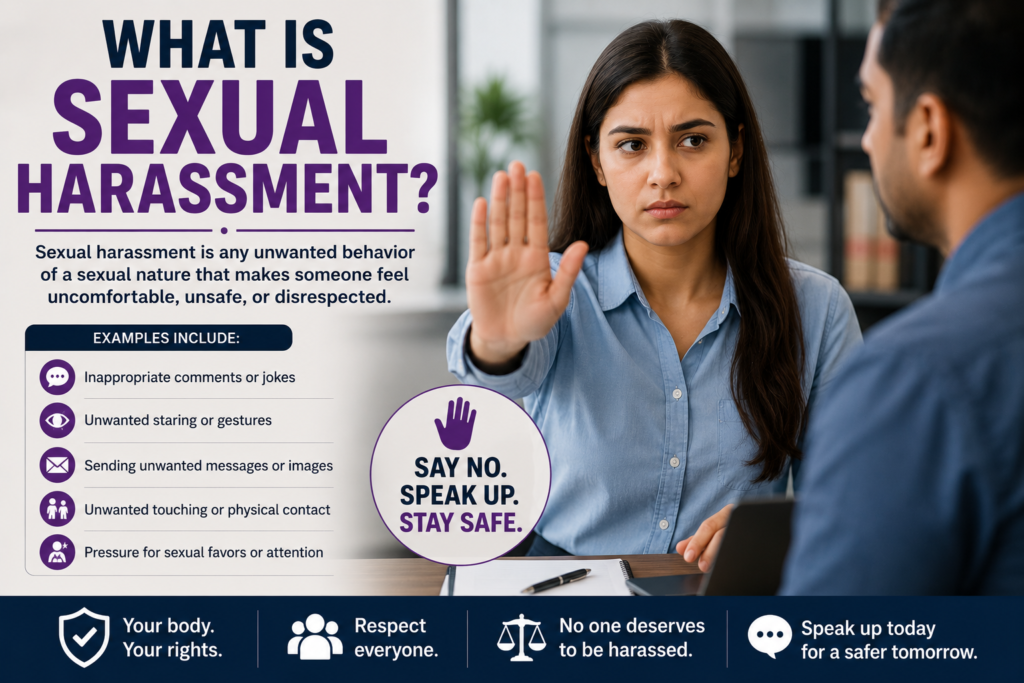
Sexual harassment is when someone does something that makes another person feel uncomfortable unsafe or disrespected. This can happen at work, school, college in public, online or anywhere people are together.
It is not about touching someone. A lot of people think that sexual harassment is only when someone touches them. It can also be when someone says something sends a message makes a gesture or gives them attention they do not want.
What matters is if the person does not want this behavior and if it makes them feel bad or uncomfortable.
Sexual harassment laws are different in countries and areas but they are all meant to protect people from bad behavior and make places safer.
Anyone can experience harassment no matter if they are a man, woman or something else. It can happen between people who do not know each other or between coworkers, bosses, classmates, customers, teachers or anyone else.
One kind of harassment is when someone says something bad to you. This can be comments about how you look jokes that’re not funny questions that are not okay or words that make you feel uncomfortable.
Sometimes people think they are being funny. If they keep saying things that make you feel bad it is not okay.
There is also sexual harassment.
Examples are:
- Staring at someone a lot
- Making gestures that’re not okay
- Showing pictures that’re not okay
- Sending things you do not want to see
- Making faces that’re not okay
- Getting too close to someone
Even if someone is not touching you they can still make you feel uncomfortable or scared.
If someone touches you in a way that’s not okay that is also sexual harassment. This can be blocking your way touching you in a way that’s not okay or doing anything else physical that you do not want.
It is easier to see when someone is touching you. When they are not it can still be very bad for you.
There is also sexual harassment online.
Examples are:
- Sending messages that’re not okay
- Sending messages over and over
- Sending pictures that’re not okay
- Saying mean things to you
- Asking for pictures you do not want to send
- Following you online in a way that’s not okay
Just because you are online it does not mean you can do whatever you want. You still have to be respectful.
Sexual harassment at work is something people talk about a lot.
Examples are:
- Saying things that’re not okay over and over
- Asking you to do things you do not want to do
- Making it hard for you to get ahead at work
- Telling jokes that’re not funny
- Making it hard for you to work
Sometimes people do not say anything because they are afraid of what might happen to them.
Schools and universities can also have problems with harassment.
Young people might not know what is okay. What is not because they are still learning.
If people learn about what’s okay and what is not they can stay safer.
One important thing to know about harassment is consent.
Consent means someone says it is okay to do something.
If someone is quiet, uncomfortable, scared or not sure that does not mean it is okay.
Respecting peoples boundaries is very important.
Sometimes people do not mean to make someone feel bad and it can be hard to know what to do.
That is why it is important to be careful and not jump to conclusions.
Sexual harassment can make people feel very bad.
It can make them feel:
- Stressed
*
- Embarrassed
- Scared
- Less confident
- Hard to focus
- Like they want to avoid places
People react differently to harassment depending on what happened and who they are.
A lot of people do not say anything because they are afraid no one will believe them.
If you tell someone what happened it can help make places safer.
What you can do depends on what happened and where you’re
You can:
- Tell someone to stop
- Write down what happened
- Tell someone at work or school
- Get help from a lawyer
- Talk to someone you trust
What you do depends on how safe you’re what the rules are where you are.
Places like work and school can help prevent harassment.
They can:
- Make rules that’re clear
- Have a way for people to report problems
- Teach people about respect
- Make a safe place for everyone
- Make sure people are responsible for what they do
It is better to try to prevent problems than to fix them after they happen.
It is also important to be fair.
If someone says something bad happened we should listen to them. We should also make sure we have all the facts before we do anything.
Sometimes social media makes it seem like things are simple. They are not.
Learning about harassment is not about being scared of people.
It is about being respectful communicating and understanding boundaries.
If you are respectful you will:
- Listen when someone says no
- Respect peoples space
- Not bother people over and over
- Communicate clearly
- Treat people professionally
Most of the time when people are respectful everything is okay.
In the end sexual harassment is when someone does something that makes another person feel uncomfortable scared or disrespected.
It can happen in ways like, with words, actions, messages or touch.
If people understand boundaries, consent, respect and communication they can make places and better relationships.