
Sexual Selection
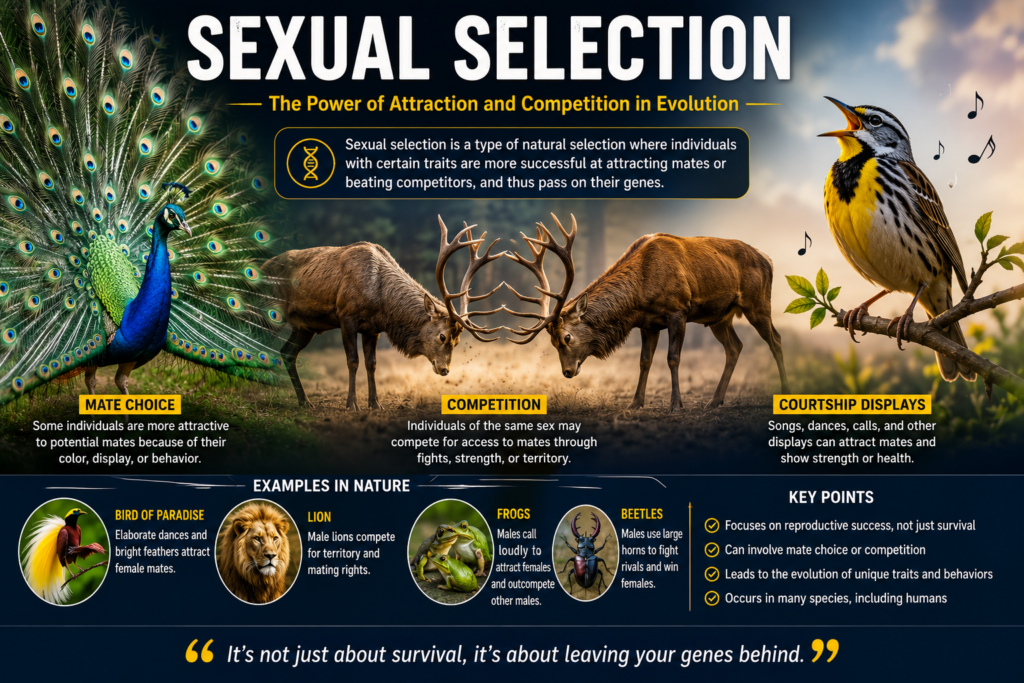
Sexual selection is a concept in biology that explains how certain traits develop because they help individuals attract partners or increase chances of reproduction. It is one of the ideas connected to evolution. Helps explain why many animals. And sometimes human preferences. Show certain behaviors, appearances or competition patterns.
At first sexual selection may sound complicated but the basic idea is simple: some characteristics become more common over generations because they make individuals more successful at attracting mates. Sexual selection is different from survival. Some traits do not necessarily help an animal live longer. They may mainly help it become more attractive or more competitive.
This article explains selection in simple and easy English.
What Is Sexual Selection?
Sexual selection is a process where certain traits become more common because they increase the chance of reproduction. In words: animals that are more successful at attracting partners are more likely to pass their genes to the next generation. Over generations those traits become more visible.
Sexual selection focuses on reproduction success than only survival. Examples of traits that can become more common due to selection include:
- Bright feathers
- Strong body structure
- Special mating displays
- Songs or sounds
- Competitive behavior
Sexual Selection vs Natural Selection
People often confuse these two ideas. Natural selection is about survival. Examples of traits that help animals survive include:
- Better camouflage
- Faster running
- Disease resistance
- Adaptation
Sexual selection on the other hand is about reproductive success. Examples of traits that help increase chances of reproduction include:
- Attractive appearance
- Courtship behavior
- Competition for mates
Sometimes a trait may help both survival and attraction. Sometimes the two can even conflict.
How Sexual Selection Works
Sexual selection usually works in two ways.
- Intersexual Selection. This happens when one individual chooses a partner based on traits. For example a female animal may prefer:
- colors
- Strong health
- Better displays
- Certain sounds
Over time those preferred traits become more common. This process is often called “mate choice.”
- Intrasexual Selection. This happens when individuals compete with members of the sex for access to mates. Examples include:
- Physical competition
- Dominance displays
- Territory defense
- Strength contests
Winning increases reproduction opportunities.
The peacock is an example of sexual selection. Male peacocks grow colorful tails. At first this seems strange because large feathers require energy they may attract predators. They make movement harder. So why did they evolve? One explanation is selection. Over generations peahens often preferred males with impressive displays. That preference helped those traits spread.
Examples of Sexual Selection in Animals
selection appears across many species. For example:
- Deer. Male deer often compete using antlers. Larger antlers may help during competition.
- Birds. Many birds perform songs, dancing and color displays. These behaviors may increase attraction.
- Frogs. Some frogs attract partners through calls. Stronger calls may improve success.
- Lions. Male lions may compete for territory and mating opportunities.. Survival both matter.
Does Sexual Selection Exist in Humans?
Humans are more complex than animals. Human attraction involves:
- Appearance
- Personality
- Emotional connection
- Communication
- Shared values
- Culture
- Individual preference
Biology influences attraction to some degree. Human relationships involve much more than simple biological selection. Humans make choices and social decisions that go beyond instinct alone.
Why Sexual Selection Does Not Mean “Perfect Traits”
This is important. Sexual selection does not create individuals. A trait only becomes more common if it increases success. Sometimes traits can even have disadvantages. For example:
- energy cost
- Greater visibility
- More competition
Biology does not aim for perfection. It favors traits that’re successful enough over time.
The Role of Signals
Animals often send signals to communicate fitness. Signals may include:
- Color
- Size
- Movement
- Voice
- Behavior
These signals may indicate:
- Health
- Strength
- Energy
- Genetic quality
But signals are not guarantees. They only increase probability.
Sexual Dimorphism
Sexual selection often explains differences between males and females in a species. This is called dimorphism. Examples include:
- Male lions with manes
- birds with brighter colors
- Differences in body size
These differences may develop through attraction and competition.
Why Competition Happens
Resources and reproduction opportunities are often limited. Competition may happen through:
- Strength
- Displays
- Territory
- Social status
Competition does not always mean fighting. Many species compete through appearance or behavior instead.
Attraction Is Not Physical
People sometimes misuse sexual selection to justify oversimplified ideas about relationships. Real attraction is usually more complex. In humans attraction may involve:
- Trust
- Humor
- Intelligence
- Kindness
- Stability
- experiences
Reducing human relationships to pure biology ignores social and emotional reality.
Misunderstandings About Sexual Selection
There are common myths.
Myth 1: only appearance matters. Reality: behavior, health, communication and many other factors matter.
Myth 2: sexual selection means stronger always wins. Reality: different species reward traits.
Myth 3: human attraction is purely biological. Reality: human attraction combines biology, culture, emotions and personal values.
Sexual Selection Changes Over Time
Preferences can change. Environmental changes, social structures and population differences may influence which traits become useful. Evolution is not fixed. Selection pressures change over generations.
Modern Research and Sexual Selection
Scientists continue studying:
- Mate choice
- Competition
- Evolution
- Social behavior
- Communication
Modern biology sees selection as an important part of understanding how species develop and adapt.. Researchers also recognize that attraction and behavior are often more complex than older simplified explanations.
Why Sexual Selection Matters
Understanding selection helps explain:
- Animal behavior
- Evolution
- diversity
- Physical differences between species
It gives insight into why certain traits appear when they seem costly. It also reminds us that survival alone does not explain all of biology.
Final Thoughts
Sexual selection is a process where certain traits become more common because they improve reproductive success. Unlike selection, which focuses mainly on survival sexual selection focuses more on attraction and competition. It can happen through:
- Mate choice
- Competition
- Displays
- Signals
- Behavioral differences
selection helps explain many interesting patterns in nature. At the time human relationships remain more complex than simple biological rules. Real human connection usually involves more, than attraction alone. Including communication, personality, trust and emotional understanding.