
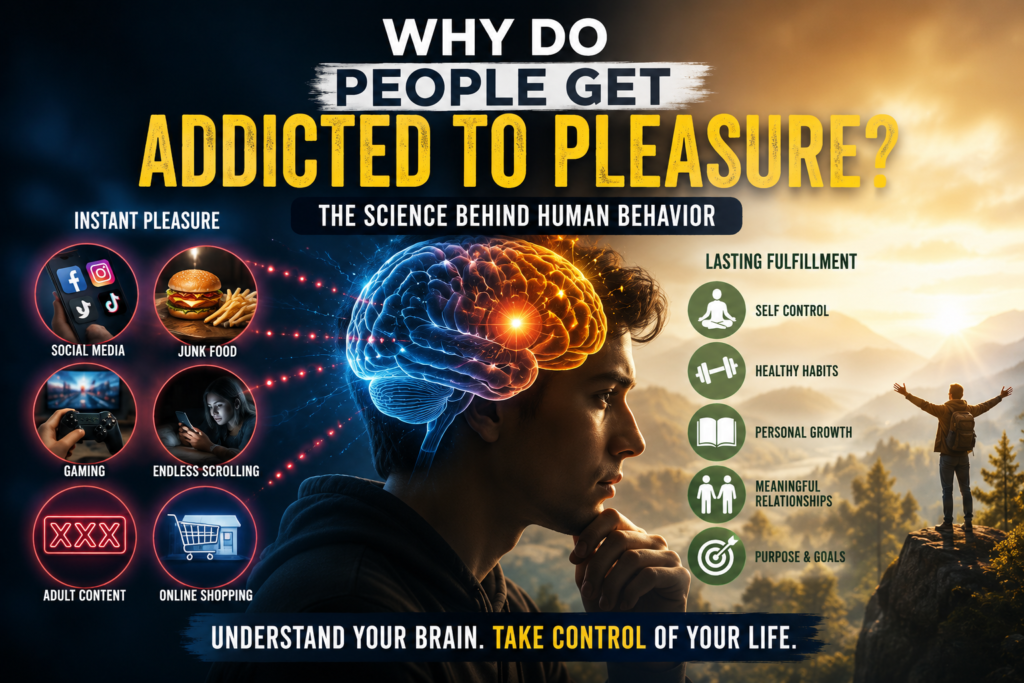
Why Do People Get Addicted to Pleasure
#
Pleasure is a part of life that people enjoy. People like food, entertainment, spending time with friends and family achieving things and other things that make them happy. Pleasure is not bad. It helps people want to do things learn and survive.
Problems happen when people want pleasure too much. Some people always look for things that make them happy away even if those things are bad for their health, work, relationships or long-term plans.
This makes us ask: Why do people get addicted to pleasure?
The answer is that it is a mix of how the brain works how people think, what they do every day and how people live today. If people understand how pleasure works they can make choices and have more control over themselves.
In this article we will talk about what pleasure’s why it can be addictive and how to have a healthy balance.
What Is Pleasure
Pleasure is a feeling that people get when they do something fun.
For example:
- Eating food that tastes good
- Spending time with people they love
- Achieving something they wanted to do
- Listening to music
- Playing games
- Watching things that’re fun
- Getting praise or recognition
Pleasure is part of the brains reward system. This system helps people do things that’re good for them.
When something feels good the brain remembers it. Wants to do it again.
The Role of Dopamine
To understand why people get addicted to pleasure we need to understand dopamine.
Dopamine is a chemical that helps people want to do things.
Dopamine helps people:
- Want to do things
- Learn things
- Do things over and over
- Try to achieve things
When people do something dopamine levels go up.
This tells the brain: “This feels good. Remember it. Do it again.”
This system helped people survive a time ago by making them want to find food build relationships and achieve important things.
The problem starts when people can get rewards easily and often.
Why Modern Life Makes Pleasure Hard to Resist
A time ago people had to work hard to get rewards.
For example:
- Food had to be hunted or grown.
- Entertainment was limited.
- Talking to people took time.
- Achieving things took a time.
Today people can get rewards away.
For example:
- Notifications on media
- Short videos
- Entertainment on the internet
- Fast food
- A lot of content
The brain was not made for this kind of world. Modern technology can be too much for the brain.
Because rewards are easy to get people get used to being stimulated.
The Cycle of Pleasure Seeking
Getting addicted to pleasure usually happens in an order.
Step 1: Reward
Someone does something fun.
Step 2: Dopamine Release
The brain feels good. Wants to do it again.
Step 3: Repetition
The person does it again.
Step 4: Habit Formation
After a while it becomes a habit.
Step 5: Increased Craving
The brain wants it more and more.
As this happens people may want pleasure more.
They may not really enjoy it. They are used to it.
Why Quick Rewards Feel Powerful
People like rewards that happen right away.
This is called ” gratification.”
For example:
- Watching videos is easier than studying.
- Looking at media is easier than exercising.
- Eating food is easier than making healthy food.
The brain usually chooses the thing that gives a reward.
Many quick rewards do not last long and are not good for people in the long run.
Tolerance and the Need for Stimulation
One reason people get addicted to pleasure is that they get used to it.
When people get used to something it does not feel as good.
So they want stronger stimulation.
This is like when people get used to something they liked at first.
The brain gets used to it. It feels normal.
So people look for things to get excited about.
The Connection Between Stress and Pleasure Seeking
Stress is another reason.
When people feel stressed, lonely, anxious, bored or frustrated they look for things that make them feel better.
Fun things can distract people from feelings.
It does not solve the real problem.
If people do not deal with stress they may use pleasure to feel over and over.
This can create habits.
Why Self-Control Becomes Difficult
Many people think that not having self-control means they are weak.
Self-control is affected by many things:
Sleep
Not sleeping well makes it hard to make choices.
Stress
much stress makes people do things without thinking.
Environment
Being around things that distract people makes it hard to have self-control.
Habits
Doing things over. Over makes them easy to do without thinking.
When these things happen together it is hard to resist temptation.
Signs You May Be Overdependent on Pleasure
Some common signs are:
- Having trouble focusing on things
- Needing to be entertained all the time
- Feeling restless when it is quiet
- Putting things off until later
- Not wanting to work towards long-term goals
- Spending much time online
- Having trouble waiting for things
It’s normal to do some of these things sometimes.
If people do them all the time they should think about their habits.
How to Build a Healthier Relationship with Pleasure
The goal is not to stop feeling pleasure.
Pleasure is an important part of life.
The goal is to have balance.
Create Healthy Sources of Reward
Choose things that’re fun and good for people in the long run.
For example:
- Exercise
- Learning things
- Reading
- Doing things
- Spending time with people who care
Practice Delayed Gratification
Train yourself to wait before doing fun things.
For example:
- Finish work before playing.
- Finish exercise before relaxing.
- Achieve goals before doing fun things.
Reduce Unnecessary Stimulation
Think about limiting:
- Using media too much
- Getting many notifications
- Scrolling through things for long
Reducing stimulation helps the brains reward system work better.
Develop Strong Daily Habits
Having a routine helps people not rely on wanting to do things.
Good habits become easy to do.
Manage Stress Effectively
Use ways to deal with stress, such as:
- Walking
- Meditating
- Breathing deeply
- Writing in a journal
- Being active
Dealing with stress reduces the need to seek pleasure to feel better.
Conclusion
Understanding why people get addicted to pleasure starts with understanding how the brains reward system works. Pleasure is not bad. It helps people want to do things learn and be happy.
Modern life has too many easy rewards that can be too much for the brain. When pleasure is the way to deal with boredom, stress or discomfort bad habits can form.
The key is not to stop feeling pleasure but to feel it in a way. By building habits having self-control reducing unnecessary stimulation and focusing on important goals people can enjoy pleasure without being controlled by it.
True happiness usually comes from balancing fun with purpose, growth and being healthy, in the run.